
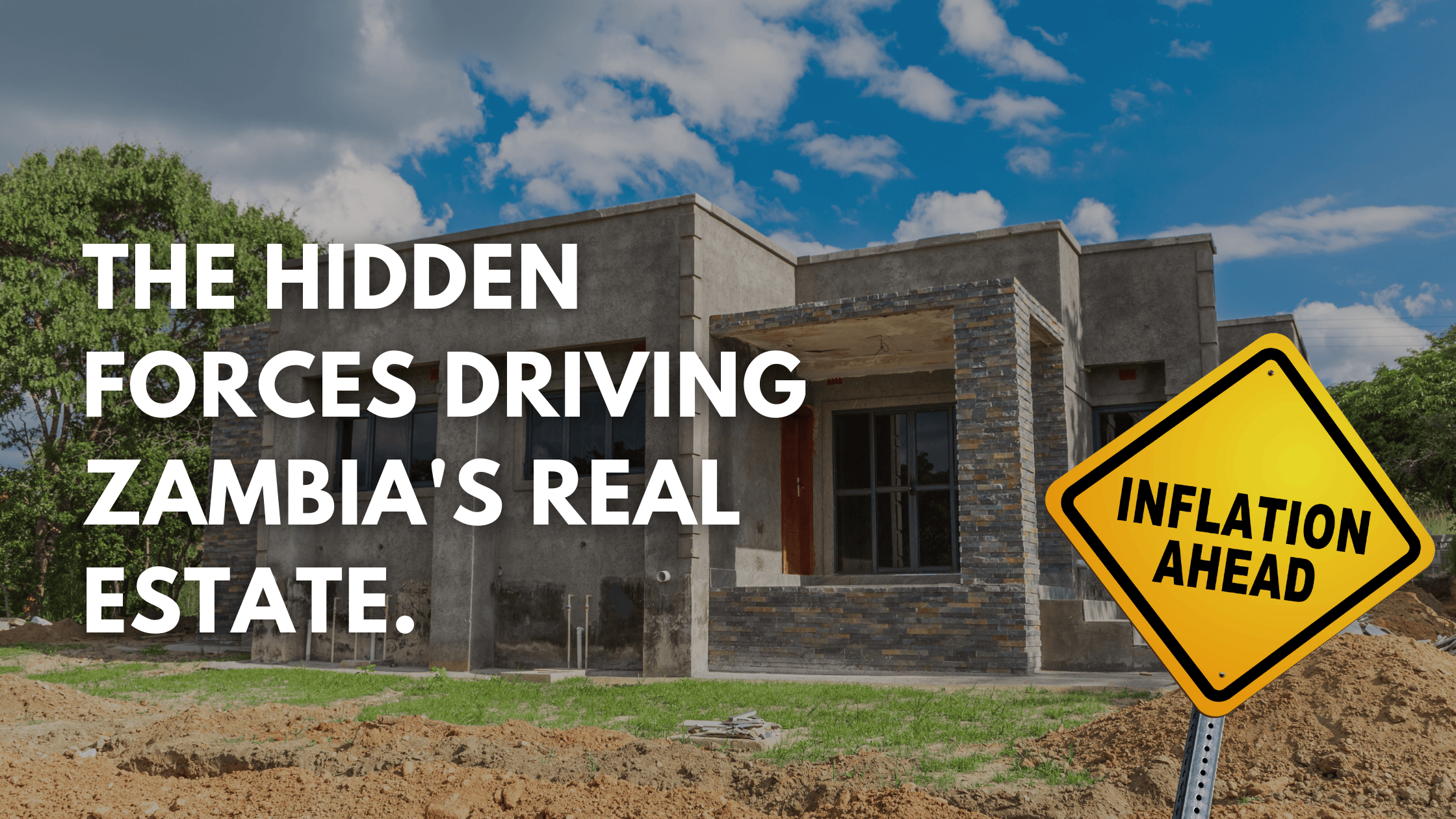
Zambia’s real estate sector is undergoing rapid transformation, with new developments reshaping Lusaka, Kitwe, and Ndola and attracting both local and international investors. While rising construction and strong demand signal growth, two hidden economic forces inflation and currency fluctuation are quietly shape property prices, investment returns, and affordability.
Understanding these forces is essential for making smart real estate decisions.
Why These Economic Forces Matter Now
Inflation: The Silent Price Escalator
Inflation steadily drives up costs across the property market. As prices for cement, steel, fuel, labor, and energy rise, developers pass these expenses on to buyers, making previously affordable projects significantly more expensive.
At the same time, inflation erodes the value of cash savings, prompting investors to turn to property as a tangible, safer asset. This increased demand further pushes prices upward. However, rising costs squeeze affordability for middle-income families, often resulting in smaller homes, developments on the outskirts, and longer loan terms.
The ripple effect:
- A 10% increase in material costs can translate to 15-20% higher property prices when you factor in developer margins and financing costs
- Labour costs rise as workers demand wages that keep pace with living expenses
- Energy costs affect everything from material production to on-site operations
The property itself does not change in value, only the exchange rate does. For instance, a $250,000 home equals K4.75 million at K19/$, but if the Kwacha weakens to K24/$, the same property rises to K6 million in nominal terms, reflecting currency depreciation rather than real value growth.
Currency Fluctuations: Adding Complexity
The value of the kwacha is shaped by copper prices, global markets, and policy decisions, has a direct impact on both foreign investment and construction costs. A weaker kwacha can make Zambian property more attractive to foreign buyers, but it also increases the cost of imported materials, raising development expenses. Currency instability can lead banks to raise interest rates and tighten lending, making mortgages costlier and reducing borrowing power.
Foreign Investment: A Currency Calculation
Every international investor runs this calculation: “What will my returns look like in my home currency?”
When the kwacha weakens:
- Zambian properties become cheaper in dollar or euro terms.
- Entry points become more attractive for foreign capital.
- Rental yields may look compelling when converted back.
When the kwacha strengthens:
- Property prices in foreign currency terms rise.
- Repatriation of profits becomes more valuable.
- But initial investments require more foreign capital.
Case scenario: A property purchased for ZMW 2 million when the exchange rate was 20 ZMW/USD cost $100,000. If the kwacha weakens to 25 ZMW/USD, that same property might now appear to be worth only $80,000 to a dollar-based investor—even if its local value hasn’t changed.
Strategic Adaptation in the Market
- In response, market participants adjust strategically:
- Investors hedge against inflation by focusing on rental income.
- Developers adjust pricing, phase projects, and explore cost-saving measures.
- Homebuyers seek flexible locations and financing options.
The bottom line: Zambia’s real estate market offers genuine opportunities for value creation and wealth building. But success requires more than enthusiasm—it demands informed decision-making grounded in economic reality.
The bricks and mortar you see are only part of the equation. The economic landscape beneath them determines whether your investment builds wealth or simply marks time.
Start watching those inflation reports. Track the currency movements. Understand the forces at play.
Your future real estate success depends on it.